
The 9 steps at a glance
Step 1: Pick how you will earn from color analysis
Most new analysts start with one service and add more later. Three ways are proven by several independent sources in The Color Analysis Income Report 2026:
- One-to-one color consultations: $50–$500+ · median $177 virtual, $250 in person. Example month: $1,125–$1,600.
- Color parties and group sessions: $115–$150 per guest. Example month: $900–$1,500.
- Salon color consultations: $75 for a 10-minute mini · $375 for 60 minutes. Example month: $600–$3,000.
The report ranks 12 more ways, from upsells and bridal parties to corporate image days and men’s color, each with prices and a way to start this week. Get the free income report.
Step 2: Choose who you serve
Color analysis works as a business on its own or as an add-on to work you already do. Pick the guide that matches you. Each one covers the services, packages and repeat bookings that suit that business.
Color is your main service
Styling and image
Beauty and hair
Retail and creative
Thinking about a franchise instead? Compare costs, territory and branding in House of Colour alternative: no franchise needed.
Step 3: Learn how a color season is worked out
Clients trust a result they can understand. Every season is a mix of three qualities of a person’s natural coloring:
- Hue: whether their coloring leans warm (golden) or cool (pink or blue).
- Value: how light or deep their hair, eyes and skin are together.
- Chroma: whether their coloring looks clear and bright or soft and muted.
The 12-season system asks which quality is strongest. A Light Spring is light first, a Soft Autumn soft first, a Cool Winter cool first. Use a structured method so every result is consistent and explainable: the Hathaura Method, developed by Sci\ART-certified analysts, walks you through each client step by step, and you confirm every season yourself. See how the 12 seasons work and the seasons people mix up most.
Step 4: Set up your space for accurate results
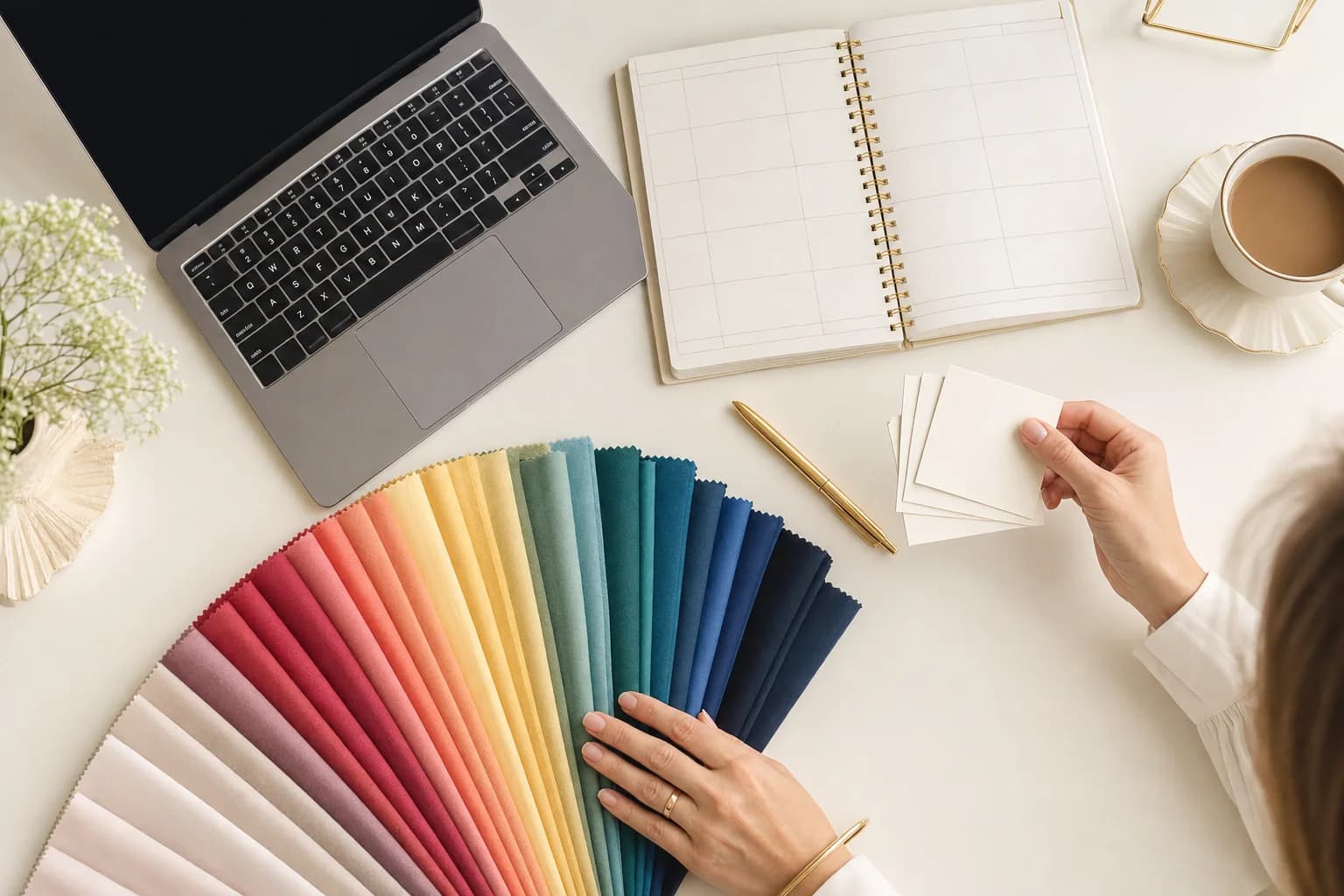
You don’t need a studio. Natural light, a neutral background and a clean face give the most reliable read, in person or from photos. In person, add a mirror, a neutral cape or top for the client and a set of drapes. For online clients, ask for photos taken by a window, without filters or heavy makeup. Our guide to running sessions from photos covers the full process.
Step 5: Choose your color analysis software
Software does the time-consuming parts: storing clients, building palettes and producing the report. When you compare tools, check these:
- Method: a recognized system, such as 12 seasons, that you can assess yourself.
- Professional control: you confirm or override the suggested season before the client sees it.
- Client report: a report the client keeps, not just a season name.
- Branding: whether the report can carry your logo instead of the software company’s.
- Price: monthly or per report, and whether it fits how many clients you see.
See the side-by-side color analysis software comparison, the full checklist for choosing software, or the roundup of color analysis apps.
Step 6: Create client reports clients actually use
The report is what clients take home and show their friends, so it does part of your marketing. A complete client report includes:
- The season and why: how their hue, value and chroma add up.
- Signature and accent colors to wear near the face.
- Core neutrals for the pieces they wear most.
- Colors to avoid, with an easy swap for each.
- Practical guidance on color pairings, metals, prints and makeup.
In Hathaura, you rate the client’s coloring, confirm the season and send a finished report. On the Pro plan, reports carry your logo, brand color and signature. See how it works.
Step 7: Price your services and see how the income adds up
Published prices fall into three levels. The median is $177 / $250 (virtual / in person), across 72 price lists.
| Level | Typical price | What it usually is |
|---|---|---|
| Entry | $50–$100 | Photo-based, virtual or 10-minute mini sessions |
| Standard | $150–$250 | A live 60–90 minute session |
| Premium | $300–$500+ | A session with styling |
How a month’s income is calculated
Your monthly income from color is the sum of four parts:
- Sessions: number of one-to-one sessions × your session price.
- Color parties: parties × guests per party × your price per guest.
- Add-ons: mini consultations or color added to other services × the add-on price.
- Follow-ups: closet edits, shopping and styling after the analysis × their price.
For example, 8 standard sessions at $200 plus one party of 6 guests at $125 comes to $2,350 before follow-ups. Try your own numbers in the free income calculator.
Step 8: Book your first color analysis clients
- Host a color party: a friend hosts 4–8 guests for about two hours, at $115–$150 per guest.
- Offer minis to existing clients: salons charge $75 for a 10-minute consultation while color processes.
- Go virtual: photo-based sessions let you take clients anywhere from day one.
Your first month, week by week
- Week 1: set up your space or online booking and practice on five people.
- Week 2: offer friends-and-family sessions and collect feedback.
- Week 3: launch your offer on Instagram and to your network.
- Week 4: book your first paying clients and ask each one for a review.
Practice first, then offer a few lower-priced sessions in exchange for reviews and photos, and move to your regular price once bookings are steady.
Demand is growing: searches for “color analysis near me” are up +15% year over year in the US.
Step 9: Grow with repeat work and add-ons
One analysis should lead to the next booking. Closet edits after an analysis run $258–$558, and bridal parties, seasonal wardrobe refreshes and shopping trips all follow naturally from a client’s palette. The income report includes a first-month plan for your profession, a price list, a color party kit and ready-to-send messages.
Most new analysts grow through referrals and partnerships, not ads:
- Reviews and referrals: ask every client for both.
- Local partnerships: salons, boutiques and photographers send clients your way.
- Color parties: meet many future clients at once.
- Shopping and wardrobe services: add them as you grow.
For packages and recurring revenue once you’re established, see building a profitable color analysis business.